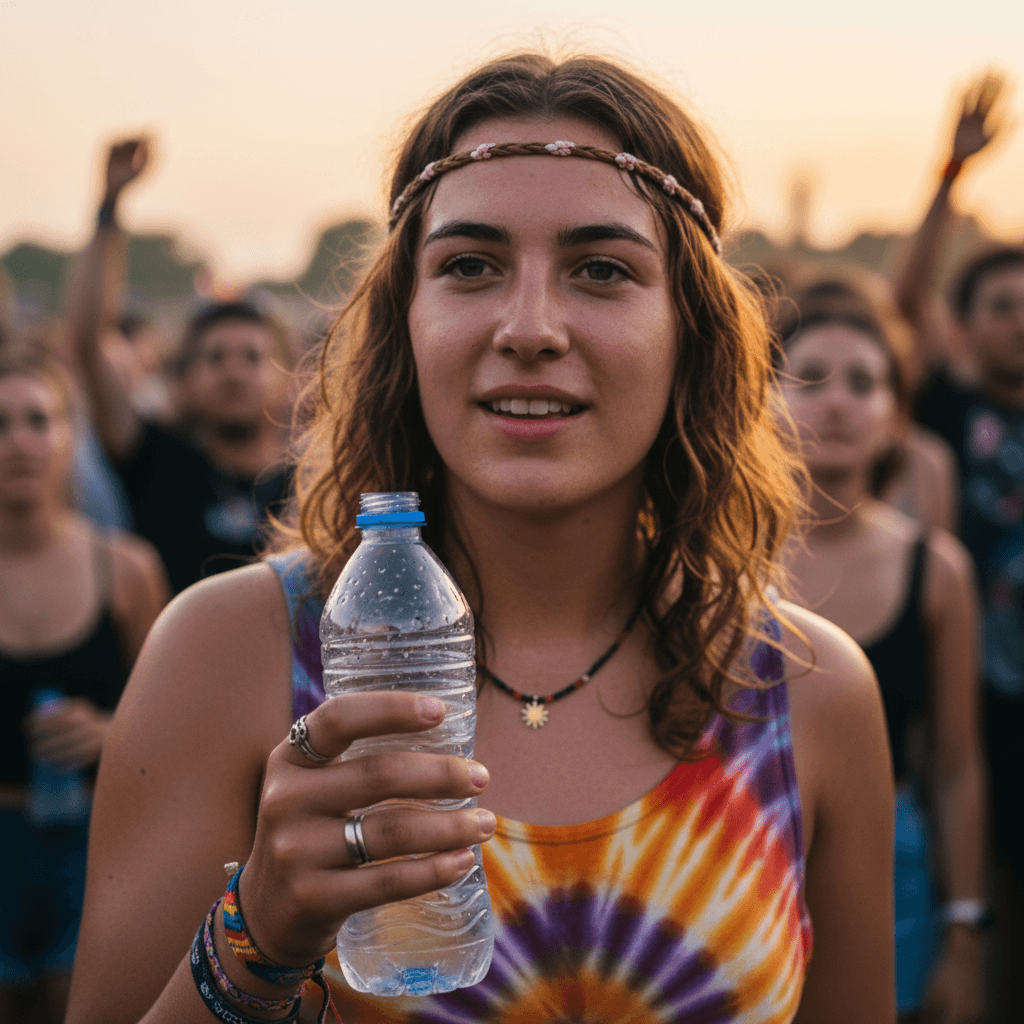
Drink protection is about more than hygiene. At festivals and large events, visitors face the risk of having something added to their drink without their knowledge. It is not always intentional, but the consequences can be serious. For organisers, this responsibility carries increasing weight: visitors need to trust that they are safe on your site. This article does not offer solutions that prevent everything, because those do not exist. It does cover practical steps that significantly reduce the risk, for both organisers and visitors themselves.
What is spiking and how does it happen at festivals?
Spiking is the act of adding alcohol or another substance to someone's drink without their knowledge or consent. The most well-known substance is GHB, but alcohol (to get someone drunk faster), MDMA and other substances are also used. Needle spiking, where a substance is injected directly into the skin, occasionally makes the news but is rarer in the Netherlands than spiking via drinks.
Precise figures on spiking in the Netherlands are hard to come by, because incidents are rarely reported and victims do not always recognise the cause of their symptoms. A 2021 study by the UK Night Time Industries Association found that more than 15% of surveyed nightlife visitors in the United Kingdom reported having been drugged at some point. The Netherlands has no comparable national registration, but police and event medical teams confirm it happens.
The setting at festivals makes it relatively easy: large crowds, limited oversight of any single individual, visitors leaving their drinks unattended, many people in a heightened state of excitement or alcohol use. That makes vigilance difficult, but also important.
What festival organisers can do
It starts with awareness inside your own organisation. Stewards, bar staff and first aid teams need to know the signs of spiking: sudden disorientation, confusion that does not match the amount of alcohol consumed, someone deteriorating quickly while others around them do not.
Concrete measures for organisers:
Staff training. Make sure your security team and hospitality staff know what spiking looks like and what to do if they suspect it. Organisations such as Het Veiligheidsnetwerk and specialised event medical providers offer training for this.
Clear reporting procedures. Make it easy for visitors to report something. A visible and accessible medical team is the foundation. Make sure staff know who to report to, not just how.
Include drink protection in your visitor policy. Communicate before the event, on your site and on the grounds, that spiking is not tolerated and that visitors can always approach the medical team.
Lighting and visibility. Dark corners and poor sightlines increase the risk. Adequate lighting in quieter areas of the site reduces the chance that someone is drugged unnoticed.
Partnership with care providers. First aid services, Jellinek, Eerste Hulp Bij Feesten (EHBF) and local public health authorities have experience with these situations at events. Involve them structurally, not just as an ambulance after the fact.
What visitors can do themselves
Visitors can do a lot too, even though it is never fair to place the full responsibility on the victim.
Keep your drink with you. The simplest measure is also the most effective: do not leave your bottle or cup unattended. Not on a ledge, not on the ground while you dance.
Do not go to an event alone. Friends who look out for each other notice things faster than a stranger or a steward at a distance.
Know the signs. If you suddenly feel far worse than your alcohol intake would suggest, head straight to the medical station. Do not hesitate.
Do not accept drinks from people you do not know. Not even if it looks like a sealed bottle. GHB is colourless and odourless and dissolves in almost any liquid.
Report it. If you or a friend experience something suspicious, report it to the medical team or security. Anonymity is not a barrier: reports help others too.
The role of a resealable bottle cap
A simple but effective measure that appears more often at festivals is the resealable bottle cap. Visitors who buy water or soft drinks can close their bottle when they put it down for a moment or stash it in a pocket. That makes adding a substance considerably harder, although it is not a watertight solution.
Party-cap makes printable festival caps that fit standard PET bottles. They are universal in use and fully custom printed with a logo or message. There is also a version with an integrated bottle opener. The caps are produced in the Netherlands and are biodegradable. For organisers or sponsors who want to use the cap as an awareness tool at their event: a quote via party-cap.com/quote/ is possible within a day.
Checklist for a safer festival
Use this as a starting point, not as a guarantee. No measure removes risk completely.
For organisers:
- Security team trained to recognise spiking symptoms
- Clear reporting procedure for staff and visitors
- Visible medical team, including a separate space for emergencies
- Adequate lighting across the entire site
- Cooperation with local care providers
- Awareness communication aimed at visitors (before and during the event)
- Optional: resealable bottle caps available or handed out
For visitors:
- Go with friends and agree on a meeting point
- Keep your drink with you or seal it
- Do not accept drinks from strangers
- Know the location of the medical station
- Report suspicious situations, even if you are not sure
As an organiser with questions about drink protection as part of your event safety policy, or if you want to discuss how a branded festival cap fits into that, get in touch via party-cap.com/contact/.