ESG reporting gets stricter every year, and greenwashing gets called out harder. A "sustainable" corporate gift that turns out to be virgin plastic from Asia falls apart immediately under audit, control, or even a critical employee reading the label. In this guide: how to choose a sustainable employee gift that actually fits your ESG report, and which three types of sustainable items work best.
What does "sustainable" mean for corporate gifts?
Three categories dominate the market:
1. Biodegradable. The material breaks down in a natural environment (compost, forest, ocean) within a reasonable timeframe. Examples: PLA bioplastic, sugar cane card, hemp cotton.
2. Recycled. The material comes from existing waste (rPET bottles, recycled aluminium, recycled cotton). Advantage: lower raw-material demand. Disadvantage: still waste at end-of-life.
3. Reusable. The object is designed to last for years, like a metal water bottle or a glass coffee cup. Advantage: replaces many disposable alternatives. Disadvantage: high production impact upfront.
None of these three is "best". It depends on what you want to report and the actual usage context of the employee.
Does it fit your ESG report?
ESG reports (CSRD, GRI, B-Corp) expect documentation per category:
Materials evidence
For "biodegradable" you need an EN13432 or similar standard certification. For "recycled" you need to demonstrate the percentage recycled content. For "reusable" you need to show that it actually lasts longer than a disposable alternative.
Production impact
A reusable aluminium water bottle from China typically has a higher CO2 footprint than a biodegradable bottle cap from the Netherlands, provided both last the same number of years. Local production saves directly on transport emissions.
End-of-life
What happens to the object at the end? Compost, plastic recycling, or general waste? A biodegradable object that ends up in general waste is not biodegraded, only incinerated.
Three sustainable corporate gifts compared
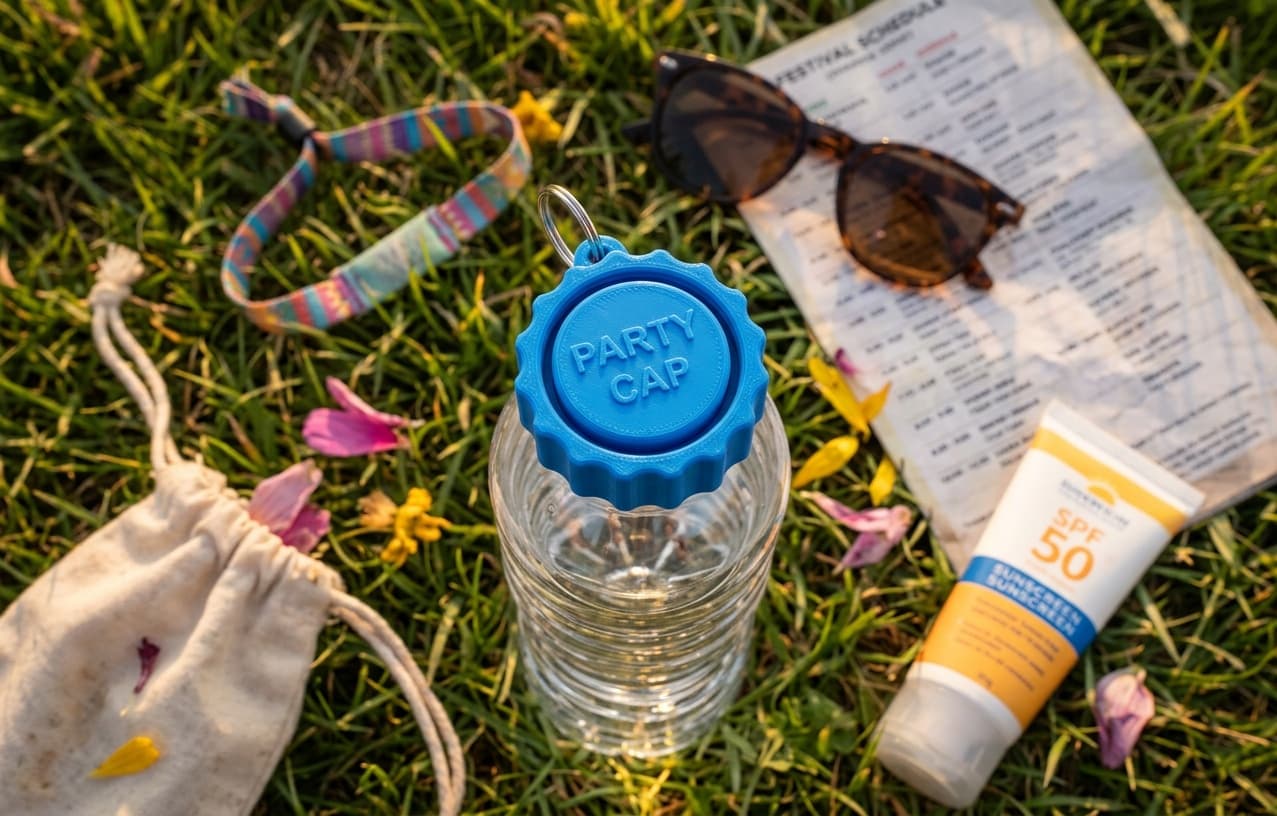
1. Biodegradable bottle cap (Partycap)
- Material: PLA bioplastic from sugar cane, not petroleum
- Production: Netherlands, local supply chain
- Greenwashing resistance: strong, material comes with certification, and for every 100 caps we produce our supplier plants a tree (verifiable CSR claim)
- Lifespan: months on a keyring, then compostable
- MOQ: 100 pieces
- Price indication: €3.00 to €3.40 per piece at 250-500 run, custom printed with logo
2. Bamboo pen or bamboo USB
- Material: bamboo casing around a plastic or metal core
- Production: usually China or India
- Greenwashing risk: medium - bamboo is sustainable but the core often contains plastic
- Lifespan: long as a pen, but the pen market is saturated for your audience
- MOQ: typically 250-500
3. Recycled cotton tote bag
- Material: post-consumer recycled cotton
- Production: often Bangladesh or Turkey
- Greenwashing risk: medium - cotton production is water-intensive, even recycled
- Lifespan: medium - tote market saturated, easily forgotten
- MOQ: typically 100-250
Which works for which employee context?
For onboarding or welcome packs: the Partycap bottle cap works strongly because it's different from what they already have. Include it in the welcome package with a short explanation of the tree-per-100 claim. Fits in an onboarding email without sounding preachy.
For team events or company outings: a bottle cap is a fun gimmick for an outdoor event. Print it with the event name and date. Cheaper than a t-shirt and lasts longer.
For external relations (clients or partners): a reusable object like a glass coffee cup works better because it's visible on a desk. A bottle cap is more an employee gift than a client gift.
Three greenwashing pitfalls to avoid
- "Eco-friendly" without evidence. Useless in ESG reports. Use concrete labels (EN13432, GRS, FSC).
- "100% biological" when only the packaging is. Specify whether the material itself is bio, or only the shipping box.
- "Plant-a-tree" without verifiability. Ask the supplier for partnership evidence. Our raw-material supplier shares an annual report of plantings.
Ready for your next sustainable employee gift?
A sustainable corporate gift is not "something with the right hashtags" but a verifiable material with traceable impact. See Partycap as a career fair giveaway for recruitment events, or request a custom quote with your logo, desired quantity and any ESG reporting questions.